
It’s essential that tent and event rental businesses run at maximum efficiency, particularly when it comes to fleet operations. This doesn’t just mean making sure vehicles are well-maintained; it runs the gamut from inventory management and driver safety to getting crews and materials to jobsites on time so installs and teardowns go according to schedule. But now, given cost increases as well as supply and labor shortages, exercising a firm grip on fleet management has become more critical than ever — which is not always easy to do given the size of some operations.
Case in point
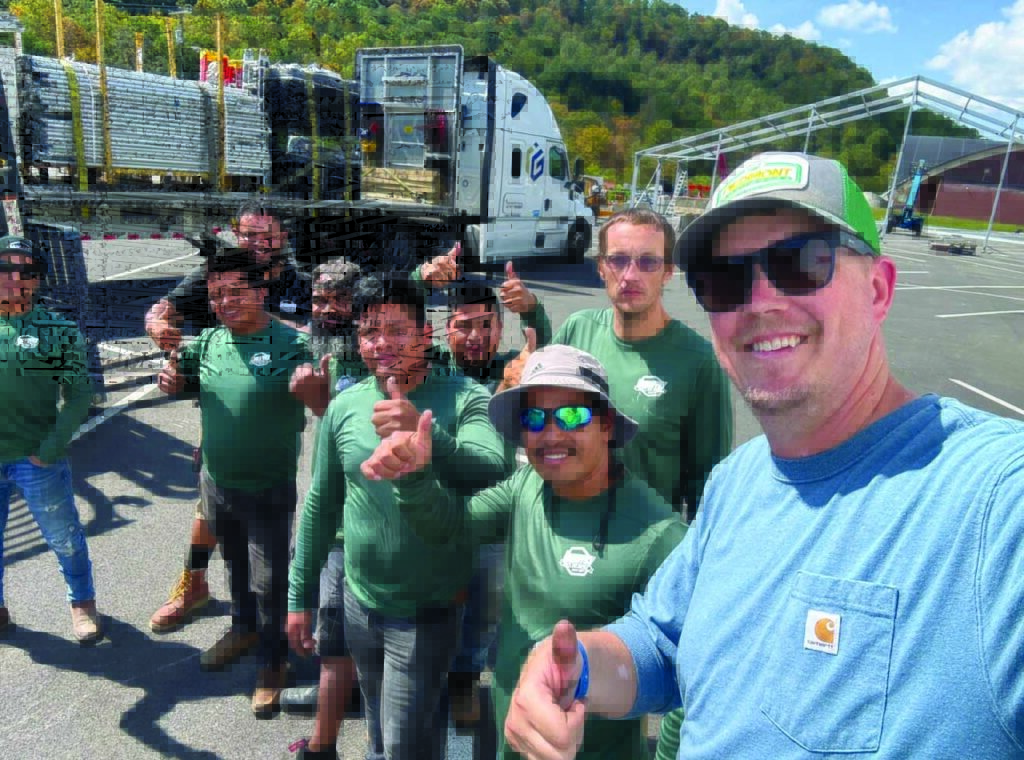
Consider Blue Peak Tents. Located in Batavia, Ill., the tent rental company serves the higher-end weddings, events and corporate markets and also provides long-term rentals for construction and restaurants, among others, says Kevin Pearson, operations manager. Presently, the company fleet consists of:
- Three 16’ small box trucks
- Sixteen 26’ big box trucks
- Four C-class, 26’ flatbeds
- Two B-class 26’ flatbeds and another of this class with a tandem axel
- One semi with a 48’ open flatbed trailer
- Additional vehicles include 11 pickup trucks, two passenger vans and one sedan used as a shop car. And because Blue Peak’s current plans are for growth, Pearson says they’re exploring adding more vehicles and crews. During peak season, there can be up to eight crews out in a day — sometimes more — each ranging from six to 12 workers, with some multiday installs.
Two of the company’s most recent acquisitions were the tandem axel and the semi, says Pearson, explaining that the tandem can carry a much heavier payload. Purchasing the semi has made renting one less necessary, although the company still does from time to time.
Mahaffey Event & Tent Rentals in Memphis, Tenn., has also expanded its fleet. Not long ago, the company — a provider of tenting, flooring, lighting, tables, chairs and other accessories for high-end weddings and events — added a 26’ stake-bed truck and a 26’ box truck, says Daniel Smith, president. The latter addition brought the number of box trucks up to six, with the fleet comprised of one van, three pickups and six trailers along with the stake bed.
The stake bed allows the company to transport heavy inventory such as flooring and blocks, also accommodating forklift loading and unloading, says Smith.
“This eliminated the manual handling required with box trucks and significantly improved efficiency for these materials,” he explains. “[This] was done because I was sick of seeing a monthly rental bill for a box truck. We got to the point where we’d rent an additional box truck at the beginning of the busy season then would continue needing it, even after we slowed down a bit.”
Supporting rapid change

Smith says those trying to determine if it’s time to add to their fleet should evaluate their fleet’s per-project efficiency metric, meaning how many trips the vehicles make for each job.
“If you’re frequently making multiple trips to the same location or turning away business due to capacity restraints, these patterns provide strong justification for fleet expansion,” he says.
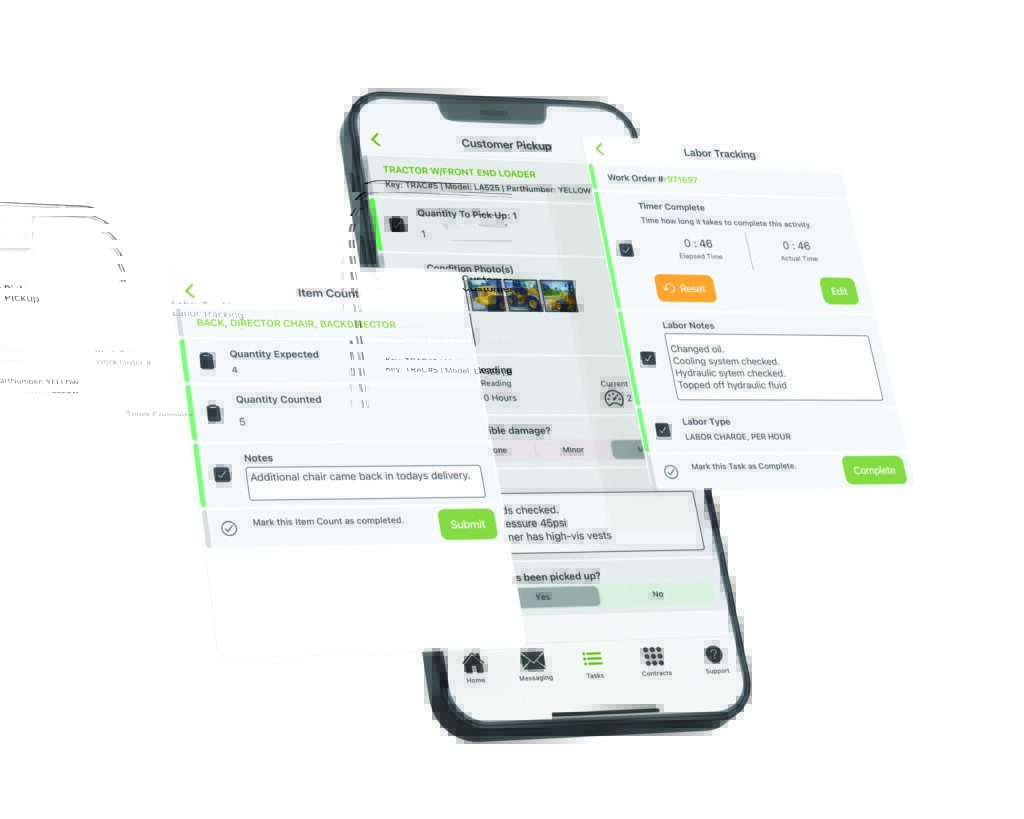
Metrics can remove much of the guesswork from fleet management while also helping rental companies overcome some of the more common logistical/safety-related challenges they face, says John Wooten, product manager for Point of Rental. Headquartered in Fort Worth, Texas, the global software company provides rental management solutions to any size company. One of its “premier rental software platforms” is Elite. Its “end-to-end” capabilities include asset management, contract management, logistics, mobile support for order fulfillment and accounting integrations, among other modules.
As Wooten explains, the issues that their technology helps address include:
- Identifying and managing inventory availability.
- Tracking inventory as it moves through the rental process.
- A lack of understanding about the event and venue.
- Unified communication across teams.
For example, knowing which items are in stock and ensuring they get to where they’re needed by the delivery date and in the required amounts are essential for customer satisfaction, says Wooten. But in today’s faster-paced environment where labor is often in short supply, attempting this without the right tools can prove extremely challenging, even for smaller operations. Ditto for tracking inventory and monitoring what has been delivered, is still out or has been returned. Software conferring this capability lets rental companies quickly identify lost or missing inventory, says Wooten, allowing them to swiftly respond, minimizing financial losses.

“A lack of understanding about the event and venue leads to mistakes like additional trips or trucks required, having the right crew on-site or having the wrong anchoring/ballast systems,” Wooten says. “In the past, limited documentation and fragmented information often caused crews to arrive underprepared. While those risks still exist, tighter staffing over the last several years has amplified the impact of mistakes.”
“With fewer people available, there’s less room for error, and every additional trip or adjustment creates strain on schedules and costs,” he continues. “Digital solutions such as interactive floor plans, GPS mapping and mobile-accessible event details have reduced some of the uncertainty by giving crews more precise and real-time venue information before and during setup.”
As for unified communication across teams, one impediment is that information comes from many different sources, such as sales, warehouses, dispatch, setup and so on, says Wooten. This can result in information gaps and inefficiencies, especially if relying solely on phone calls, paper job tickets and emails to keep everyone on the same page. Leaner staffing also has intensified the need for the streamlined communication provided by digital tools such as mobile workforce platforms, shared task boards and integrated Enterprise Resource Planning (ERP) systems that give all entities access to the same information in real time, reducing confusion and mistakes.
“The cost of poor preparedness and communication leads to increased costs and consumer dissatisfaction,” he says. “Manual, paper-driven methods cannot support the rapid changes and pivots in the event rental industry.”
High-tech and old-school
Smith says they’ve recently implemented two Point of Rental logistics management features: Logistics Tickets (L-Tickets) and the Fulfillment module. L-Tickets are especially useful for multiday installs, letting the dispatch team break down larger contracts into smaller delivery tickets. Among other advantages, this lets clients know when certain items will arrive on-site. The Fulfillment module, designed to track inventory movement throughout the logistics process, is helping its operations become more paperless while providing “real-time visibility,” says Smith.
Blue Peak has deployed several platforms, such as Monday.com, a cloud-based operating system used to manage projects and processes and to create customized workflows. One way the company is using this is as a ticket system where drivers can alert to any issues they’re having with a vehicle, says Pearson, adding they also have running spreadsheets detailing vehicle maintenance.
T3 by EquipmentShare® is another cloud-based ops system that has been a useful tool for Blue Peak. Designed for the construction industry, it tracks equipment, people and materials throughout the project’s duration. For maintenance purposes, this system provides real-time information about any codes that come up indicating a problem with a vehicle as well as what the code means.
Blue Peak also has installed Ford’s MyKey® on certain vehicles. This safety feature, programmable via a key fob, can set speed-limit restrictions, sending audible and visual alerts to drivers when they’re approaching that limit. It will also send a notification if a driver exceeds the limit, says Pearson. To minimize distractions, audio volume limits can be controlled (or the radio turned off, such as when backing up, which Pearson says they do). Trackers, GPS and AI cameras are deployed to monitor not only where the vehicles are but driver safety as well.

For example, the cameras record instances of inattentive driving or unsafe practices like abrupt braking or not fastening seat belts.
“We’ve had these cameras for about four years now and it’s been great,” Pearson says. “Before, we were flying blind, but now, we can actually see what is going on. This has significantly improved driver compliance to rules and regulations.”
Low-tech strategies can also make a difference for fleet management and safety. Smith says one of Mahaffey Event & Tent Rentals’ most impactful moves was establishing a night shift for truck loading and unloading. Prior to this, field crews handled this themselves — an arrangement that not only caused delays but led to “bottlenecks,” he explains.
“We’d have way too many people in the warehouse at 7 a.m. scrambling to load their trucks and start their day,” Smith says. “Now they can come in, double-check the truck and start their routes. Secondly, in that hurry-up and crowded environment, there was more opportunity for error, and we all know that second runs can cost the business big time.”
The shift launched more than a year ago, requiring the addition of just two employees to the company’s 70-person workforce, which increases by 10%-20% seasonally. Typically, there are four or five people on the shift, which runs from midnight to 8 a.m. Several of those workers, such as the night supervisor, were serving in other capacities at the company and decided the schedule change suited them.
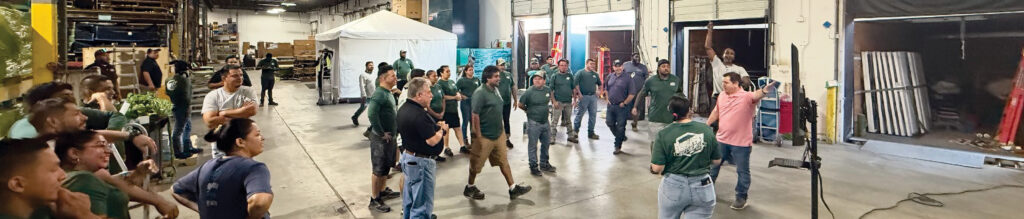
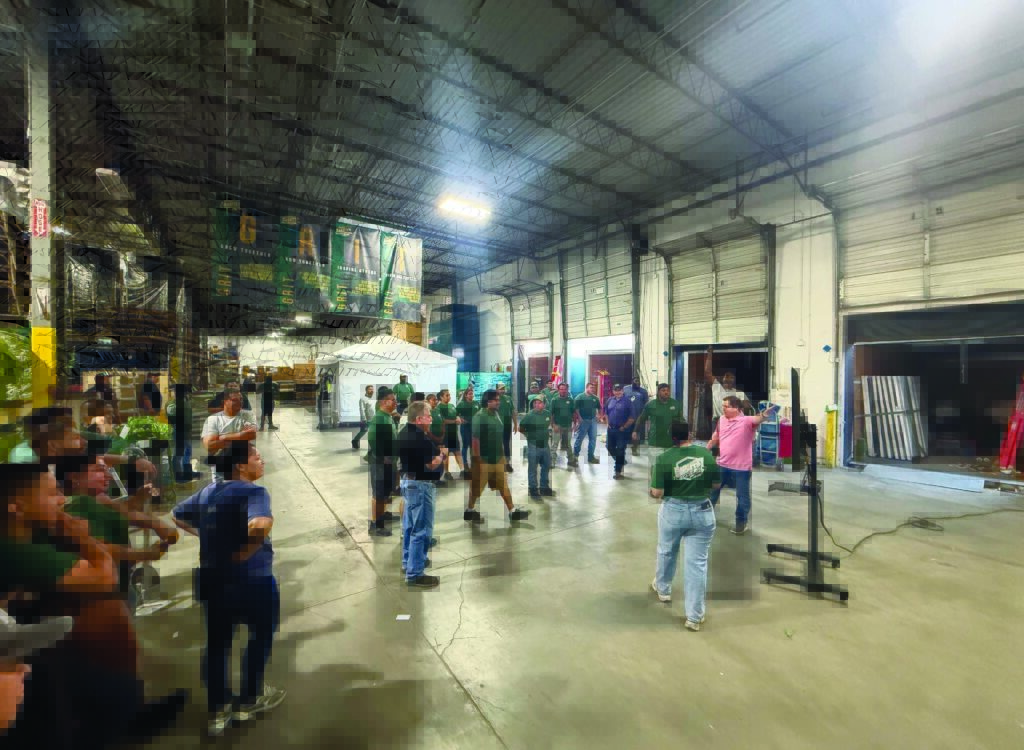
This year, Mahaffey Event & Tent Rentals is implementing a daily 10-minute morning “huddle” for warehouse and field crews, where safety practices are discussed, says Smith. Incorporated into this are team stretches as well as the sharing of any upcoming concerns, acknowledgements and performance kudos.
Pearson says Blue Peak’s training has “absolutely changed” over several years.
“We’re taking a more formalized approach, designating specific times and topics,” he says. “Training used to happen during the offseason. But now, because of growth, we’re looking at increasing the amount of training to take place either quarterly or biannually and across all departments in order to keep safety more front of mind.”
Pamela Mills-Senn is a freelance writer based in Seal Beach, Calif.
Digital tools clearly offer those involved with fleet management and safety real advantages, but this doesn’t mean all parties are going to be receptive. In fact, due to a tendency to resist change, getting some people to accept new ways of working can prove extremely frustrating, says John Wooten, product manager for Point of Rental in Fort Worth, Texas. But considering the difference the right software can make, trying to get everyone on board is worth the effort.
To this end, Wooten suggests rental companies start small. Begin with manageable changes, opting for those that clearly demonstrate value. “[This will] build momentum, making broader adoption easier,” he says.
He also recommends involving leadership. Sometimes resistance comes from the top down, especially if leaders are attached to processes already in use. “Overcoming these challenges requires both strong leadership and a thoughtful, incremental approach to foster buy-in across all levels of the organization,” says Wooten.
Companies considering fleet management software for the first time should focus on their business objectives. Identify what you’re trying to achieve — for example, reducing logistics costs or increasing transparency — then involve all stakeholders to ensure the solutions under consideration fit the organization’s financial, operation and regulatory needs. Also evaluate the software’s scalability, integration with existing systems and ease of use.
“For those considering switching providers, success depends on planning the transition carefully. Pay attention to data migration, ongoing support and continuity of operations during the changeover,” says Wooten. “In both cases, viewing software as a tool to achieve defined outcomes rather than a stand-alone purchase makes all the difference.”






Leave A Comment