
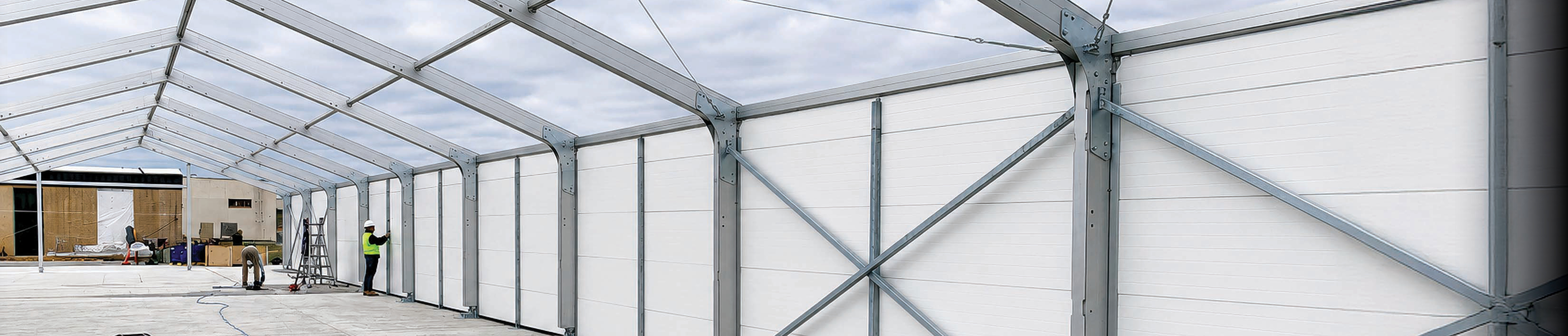
Once valued primarily for their speed of deployment and flexibility, today’s clearspan structures increasingly are expected to perform like permanent buildings. Whether serving as manufacturing space, climate-controlled warehouses, aviation hangars, corporate hospitality venues or emergency-response facilities, owners want structures that maintain comfortable interior temperatures, reduce energy consumption and provide greater security over deployments that can last months or even years.
Those expectations are fueling demand for insulated enclosure systems. Advances in insulated wall panels, thermal roofs and engineered building components are allowing manufacturers and rental companies to offer structures that support year-round operations while preserving the mobility and modularity that have always defined the industry.
“Today’s clearspan structures are no longer viewed as temporary tents,” says Keith Krzeminski, executive vice president of Shelter Structures America in Palos Verdes Estates, Calif. “The expectation has shifted toward engineered building solutions. When paired with insulated enclosure systems, they deliver year-round comfort, improved energy efficiency, enhanced security and the flexibility organizations need to respond quickly to changing operational demands.”
While insulated systems traditionally have been associated with extending the use of temporary structures into colder months, manufacturers say the greatest value comes from the systems’ ability to moderate temperatures in virtually any climate. By reducing heat transfer through walls and roofing systems, insulated enclosures lessen the demands placed on heating and cooling equipment, creating more stable interior environments while lowering operating costs.
Brenda Borgman, vice president of sales and marketing at Keder Solutions® and RiteChoice® Ducting LLC in Oak Creek, Wis., says many customers are surprised to learn that insulation can provide as much benefit during the summer as it does during the winter.
“One of the biggest misconceptions is that insulated panels are only beneficial during winter months,” Borgman says. “In reality, they provide significant value year-round by reducing heat gain during the summer, improving HVAC efficiency, lowering operating costs and creating a much more comfortable interior environment.”
Victor Manzano, managing director of HR Structures Inc. in Glenview, Ill., says performance depends on selecting the right solution for each application. Panel thickness, insulation level and local climate all influence how effectively an enclosure controls interior temperatures.
“Insulation — especially in the form of sandwich panels used in tents or temporary structures — can dramatically reduce the load on heating and air-conditioning systems,” Manzano says. “The degree depends on panel quality, thickness and setup, but the impact is often very significant compared to uninsulated fabric tents.”
A high-performance building envelope
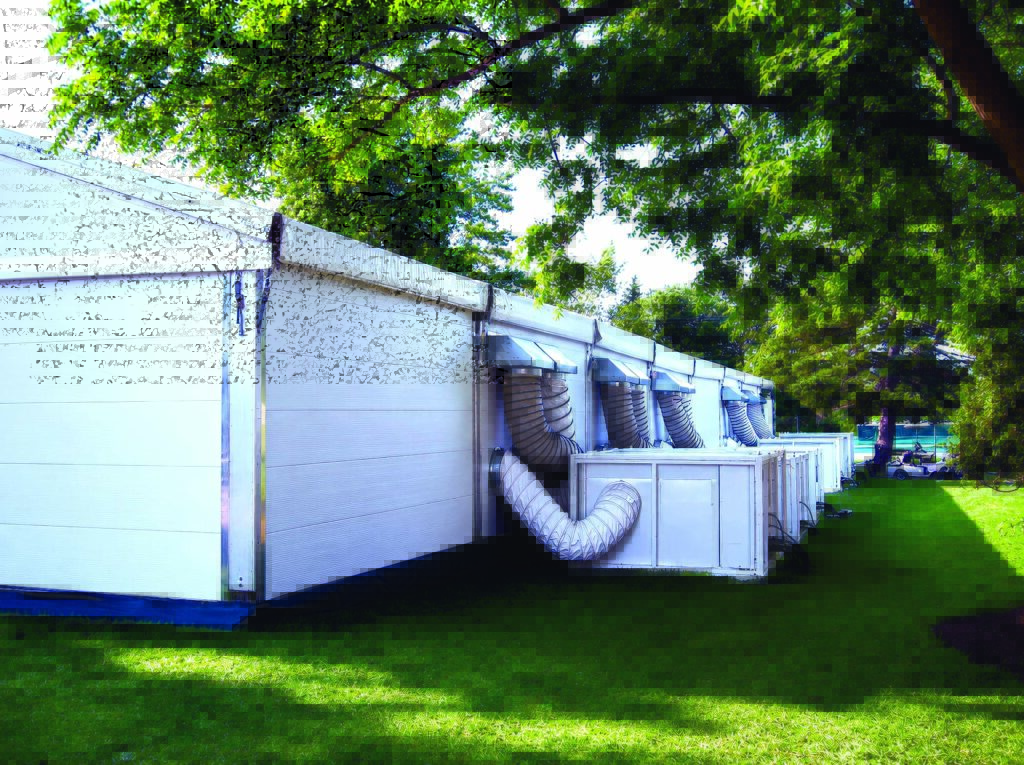
Modern insulated structures rely on a combination of wall systems and roofing technologies to create a continuous thermal barrier. Most wall systems use insulated sandwich panels constructed with steel or aluminum facings surrounding a rigid foam core. Depending on the application, manufacturers may specify polyurethane, mineral wool or expanded polystyrene insulation, each offering different thermal and structural characteristics.
At Shelter Structures America, insulated wall systems typically incorporate steel-faced sandwich panels with rigid foam cores. Keder Solutions’ ThermoShield™ insulated steel panel system uses a steel exterior surrounding a high-density polyurethane foam core, while HR Structures commonly uses sandwich panels with polyurethane cores and aluminum sheets.
“Each ThermoShield insulated steel panel is constructed with a rugged steel exterior surrounding a high-density 1 ³/8” polyurethane foam core,” Borgman says. “This advanced insulation provides exceptional thermal performance while also adding rigidity and structural strength to the panel.”
Roof systems can also contribute significantly to overall performance. In addition to insulated roof panels, many structures use thermal air roofs — double-layer PVC membranes inflated to create an insulating pocket of air that reduces heat transfer while maintaining the lightweight characteristics of fabric construction.
Manzano says thermal air roofs are sometimes misunderstood by buyers. “The inflation system for thermal roofs is simple,” he says. “Another misconception is that these systems are noisy, but in practice, they operate quietly and efficiently.”
Like conventional building materials, insulated panels are rated by R-value, allowing manufacturers to tailor thermal performance to project requirements. Higher R-values indicate greater resistance to heat transfer, although the appropriate rating depends on climate, occupancy and project duration.
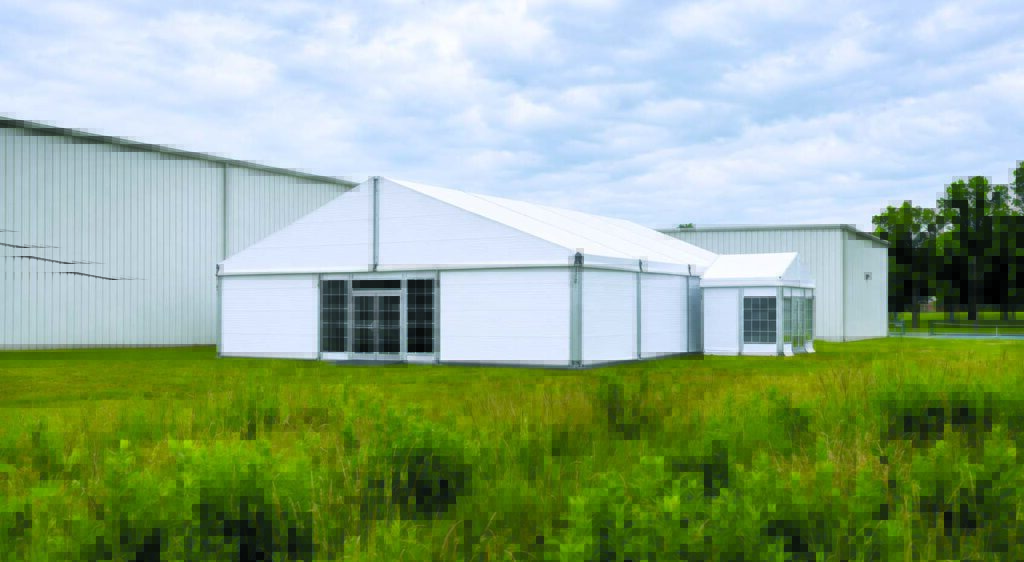
“Our standard ThermoShield insulated steel panels provide an R-value of approximately 12.12,” Borgman says. “Because RiteChoice specializes in custom-engineered solutions, we can also manufacture panels with thicker insulation and higher R-values to meet specific climate conditions, energy-efficiency goals or customer requirements.”
Krzeminski says customers operating in extreme temperatures or planning long-term installations often select higher R-value systems to maximize energy efficiency, while shorter-duration applications may prioritize lighter-weight solutions that simplify handling and installation.
Regardless of the specific product, manufacturers stress that thermal performance depends on the complete building envelope rather than any single component. Wall panels, roof systems, doors, glazing and HVAC design work together to determine how efficiently a structure maintains interior conditions.
Lowering energy costs
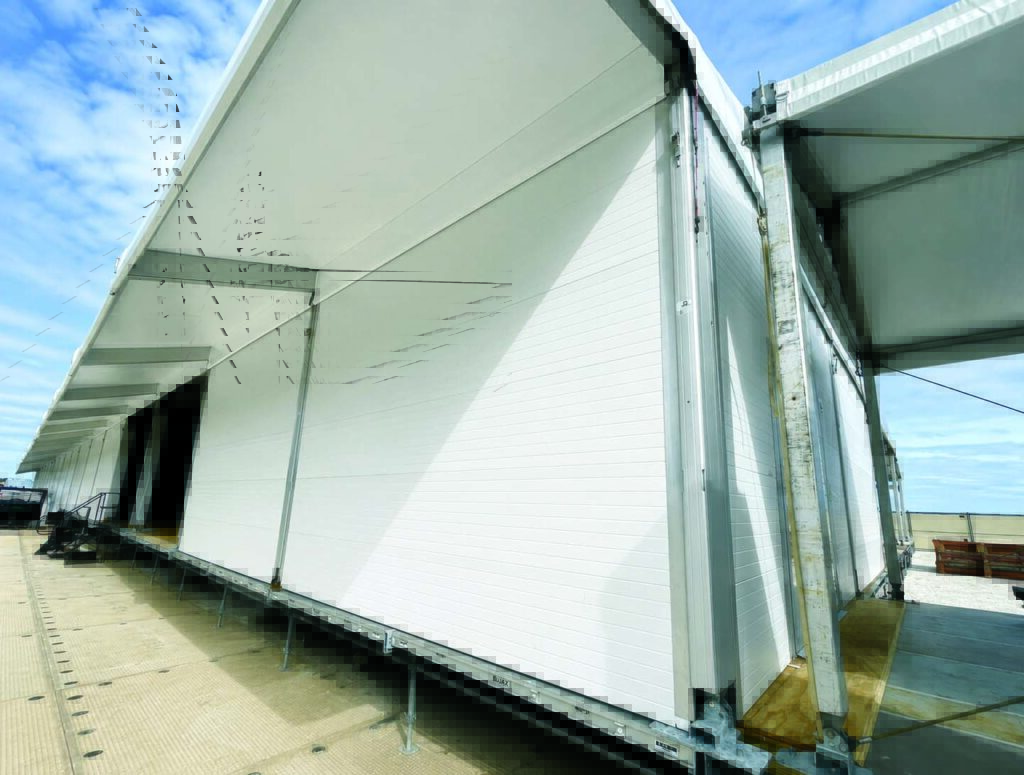
For many owners, the greatest return on insulated systems comes through reduced heating and cooling demands. Conventional single-membrane fabric structures allow heat to move relatively freely through the enclosure, forcing HVAC equipment to work harder as outside temperatures change. Insulated panels significantly reduce that thermal exchange, allowing conditioned air to remain inside longer and creating more consistent indoor temperatures.
“The reduction depends on the size of the structure, climate, occupancy and HVAC design,” Krzeminski says. “Insulated structures can significantly decrease heating and cooling loads compared to standard single-membrane fabric structures.”
The result is lower energy consumption, reduced HVAC cycling and improved comfort for occupants. For industrial users, that can mean a more stable environment for employees, equipment and stored materials. For event and hospitality applications, it can mean a more predictable guest experience regardless of outdoor conditions.
Borgman says insulated systems help HVAC equipment operate more efficiently because less energy is required to maintain desired interior temperatures.
“By significantly reducing thermal transfer through the walls of the structure, ThermoShield insulated steel panels allow HVAC systems to maintain interior temperatures much more efficiently,” she says. “Heating and cooling equipment cycles less frequently, reducing fuel or electrical consumption while extending equipment life.”
Manzano says the difference can be especially noticeable when insulated systems replace traditional fabric enclosures.
“Compared to uninsulated fabric tents, the difference can be dramatic,” he says. “The better the panel quality and the thicker the insulation, the greater the performance advantage.”
Beyond temperature control
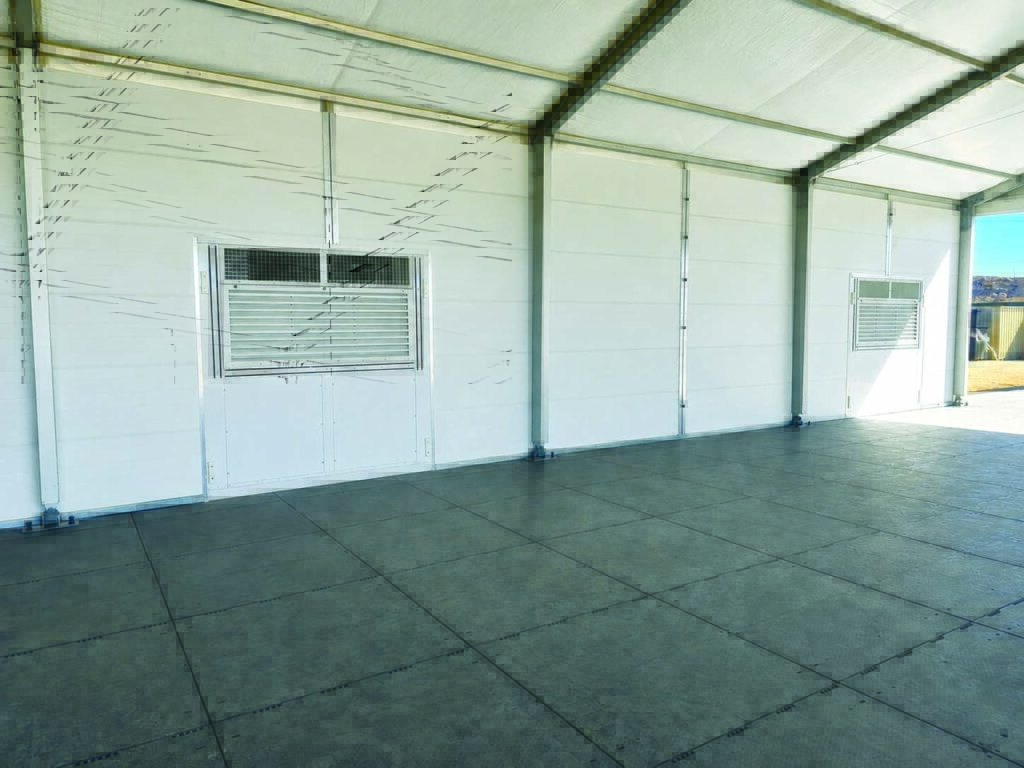
Although thermal performance often is the primary reason customers consider insulated systems, manufacturers say the benefits extend well beyond energy efficiency. Improved acoustics, enhanced security and the ability to support more demanding applications are contributing to the growing adoption of insulated enclosure systems.
Although they are not designed to create completely soundproof environments, the rigid construction and insulated cores of these panels can help reduce sound transmission, making them valuable in settings where communication, privacy and occupant comfort are priorities.
“While these systems are primarily selected for thermal performance, insulated wall panels also provide improved acoustic performance compared to standard fabric walls,” Krzeminski says. “They help reduce exterior noise transmission, making them beneficial for corporate events, broadcast compounds, hospitality spaces, command centers and industrial work environments.”
Borgman says the polyurethane foam core used in Keder Solutions’ insulated steel panels also contributes to sound reduction.
“In addition to providing thermal insulation, the polyurethane foam core helps reduce sound transmission between the interior and exterior of the structure,” she says. “This creates a quieter work environment for employees, contractors and occupants while helping minimize external noise intrusion and reducing sound generated inside the facility.”
Security is another factor driving demand, particularly as temporary structures increasingly support industrial, government and commercial applications where valuable equipment, inventory or sensitive operations require protection.
“Unlike PVC vinyl, which can be easily cut or punctured, steel panels provide a strong physical barrier that helps deter unauthorized access and protect valuable equipment, inventory and personnel,” Borgman says.
Krzeminski says this added security has made insulated structures attractive for applications including aviation facilities, motorsports operations, military installations, disaster response centers and high-value equipment storage.
Engineering and compatibility considerations
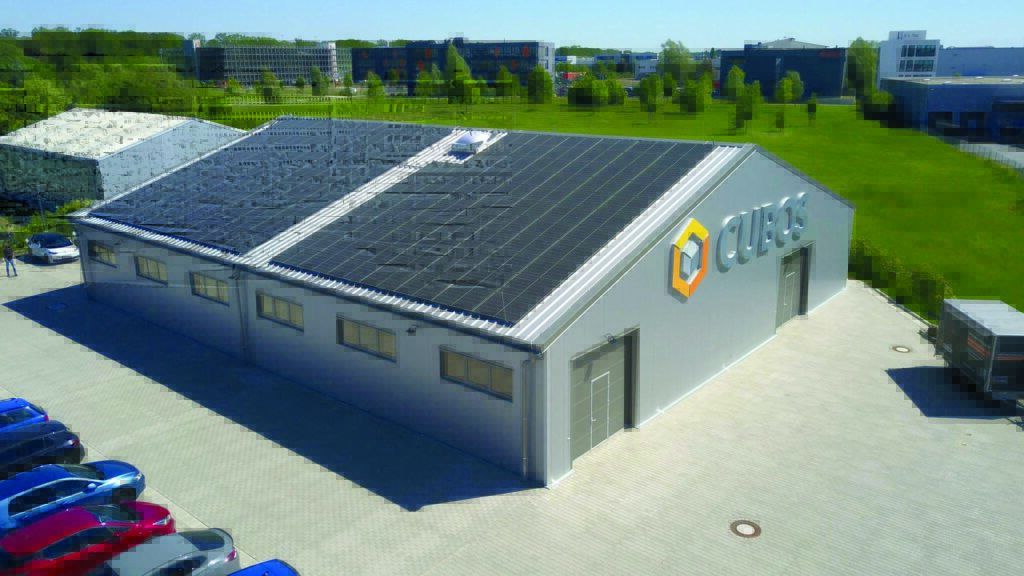
As insulated structures become more common, manufacturers emphasize that panel systems should be incorporated as part of a complete engineered solution. Although insulated panels can improve the strength and durability of an enclosure compared with traditional fabric walls, they do not replace the structural systems required to handle wind, snow and other environmental loads.
“The insulation itself is not what increases structural capacity,” Krzeminski says. “Structural resistance to wind and snow is primarily achieved through engineered aluminum framing, proper anchoring or ballast, appropriate roof fabric options and site-specific engineering.”
That distinction is particularly important as temporary structures continue moving into more demanding environments. A successful installation requires coordination among the structure manufacturer, insulated panel supplier, HVAC provider and installation team to ensure all components work together.
Compatibility also is a key consideration for rental companies looking to add insulated systems to existing inventories. While insulated panels are available for many different clearspan structures, manufacturers recommend confirming connection methods and engineering requirements before making an investment.
Keder Solutions designs its ThermoShield system to work with many tent manufacturers, provided the aluminum U-channel properly interfaces with the structure’s existing keder channel. Shelter Structures America similarly recommends engineered integration rather than simple retrofitting.
“Our insulated systems are adaptable to other tenting systems,” Krzeminski says. “We recommend engineered integration rather than retrofitting to ensure the structure continues to meet its design criteria and applicable loading requirements.”
HR Structures also focuses on flexibility, offering an in-between uprights system that allows insulated panels to be used with multiple tent manufacturers rather than limiting customers to a single structure platform.
For rental companies, that flexibility can be important when determining whether insulated components make sense as an expansion opportunity. Rather than replacing existing inventory, compatible systems can allow companies to pursue new markets that require higher-performance structures.
A new opportunity for rental companies
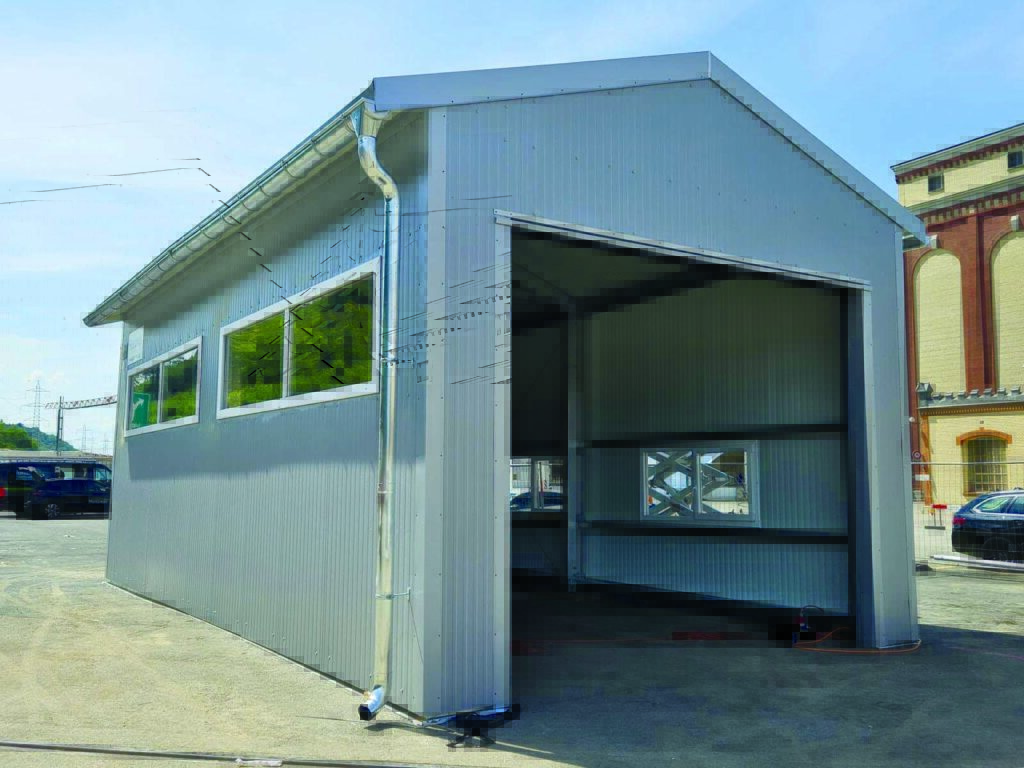
The growing demand for insulated structures is creating opportunities for rental companies to expand beyond traditional event applications. While weddings, corporate events and hospitality remain important markets, insulated systems are increasingly being specified for longer-term projects where customers need climate control, security and durability.
Manufacturers recommend that rental companies begin by evaluating their customer bases and identifying where insulated solutions can create new revenue opportunities. A company focused primarily on seasonal events may approach the investment differently than one targeting industrial clients, government agencies or long-term commercial installations.
Labor requirements involved in the installation and handling of these panels are another important consideration.
“Insulated panels require more careful handling than traditional fabric components to prevent cosmetic damage to finished surfaces,” Krzeminski says. “They generally require palletized transportation, protected storage and lifting equipment during installation, depending on panel size.”
Borgman says the logistics may differ from traditional tent components but provide significant advantages over the life of the installation.
“Although the logistics differ from fabric walls, customers gain a much more durable, energy-efficient and long-lasting solution that delivers significant value over the life of the installation,” she says.
Manzano says rental companies should evaluate several factors before purchasing, including intended applications, compatibility with existing inventory, labor requirements and the balance between cost and performance.
“Define the primary applications — corporate events, weddings, industrial or long-term installations,” he says. “Compatibility with existing inventory, labor impact on setups, thickness, core material and cost all need to be considered.”
Redefining ‘temporary’
Perhaps the clearest indication of where insulated systems are headed is the growth of semipermanent industrial applications. Organizations increasingly use engineered clearspan buildings as manufacturing expansions, warehouses, equipment storage facilities and operational spaces while avoiding the time and expense of conventional construction.
Shelter Structures America has seen particularly strong growth in this area, with companies deploying insulated structures in a matter of weeks rather than waiting years for permanent facilities.
“Rather than waiting two or three years for conventional construction and enduring a process that includes a substantial budget, organizations are deploying engineered clearspan buildings with insulated wall systems in a matter of weeks,” Krzeminski says.
These structures allow businesses to respond quickly to changing needs while maintaining the ability to expand, relocate or reconfigure as operations evolve.
For the tent rental industry, that shift represents a significant opportunity. Insulated panels are helping transform clearspan structures from temporary shelters into versatile, high-performance buildings capable of serving markets far beyond traditional events.
As customers continue demanding greater efficiency, comfort and reliability, insulated enclosure systems will likely become an increasingly important part of the industry’s future.
“This ability to combine rapid deployment with thermal efficiency, structural performance and modular design,” Krzeminski says, “is one of the primary reasons insulated clearspan structures continue to gain momentum across North America.”
Maura Keller is a freelance writer based in Minneapolis, Minn.






Leave A Comment