

It would not be an exaggeration to say that among design firms in recent years, a popular goal is creating immersive environments (IE) that envelop occupants and blend physical, digital and sensorial elements to create deep engagements and emotional connections. In other words, grounding a building to its unique site and engaging with all of our senses.
The concept of IE is redefining the boundary between the viewer and the space, turning observers into active participants. Architect and designer Carla Bonilla Huaroc, writing in ArchDaily, said it this way: “The design of these can exist at the intersection of architecture, graphic design, visual art, lighting design, music and performance.”
This Specifier’s Guide will inspire you with product listings and case studies that help create immersive environments grounded to their location and that promote fluid movement through those structures, making connections in the wider world. An added extra with fabric materials is a built-in reduction in your carbon footprint, making it a smart choice.
Grounding
Echoing the prior sentiment, two design firms featured in this guide (Gensler and TYLin) have provided their 2026 design predictions to guide the year’s efforts. First on Gensler’s six-point Design Forecast 2026 list is “Experience becomes the true measure of real estate value” in which the company states, “successful spaces deliver narrative connections, delightful moments and emotional transformation.”
For the Lightweight Structures Group of TYLin, founding director Nic Goldsmith lists adaptive reuse, circular economy, augmented reality/virtual reality, smart materials and the “Internet of Things” (IoT) as inspirational milestones.
“IoT-enabled smart structures are [helping] make buildings and infrastructure the smartest thing ever,” Goldsmith says. “IoT-enabled sensors can monitor a structure’s performance in real time … smart fabrics have become mainstream in wearable and product design, and their technology will soon be in all engineered buildings.”
Smart buildings
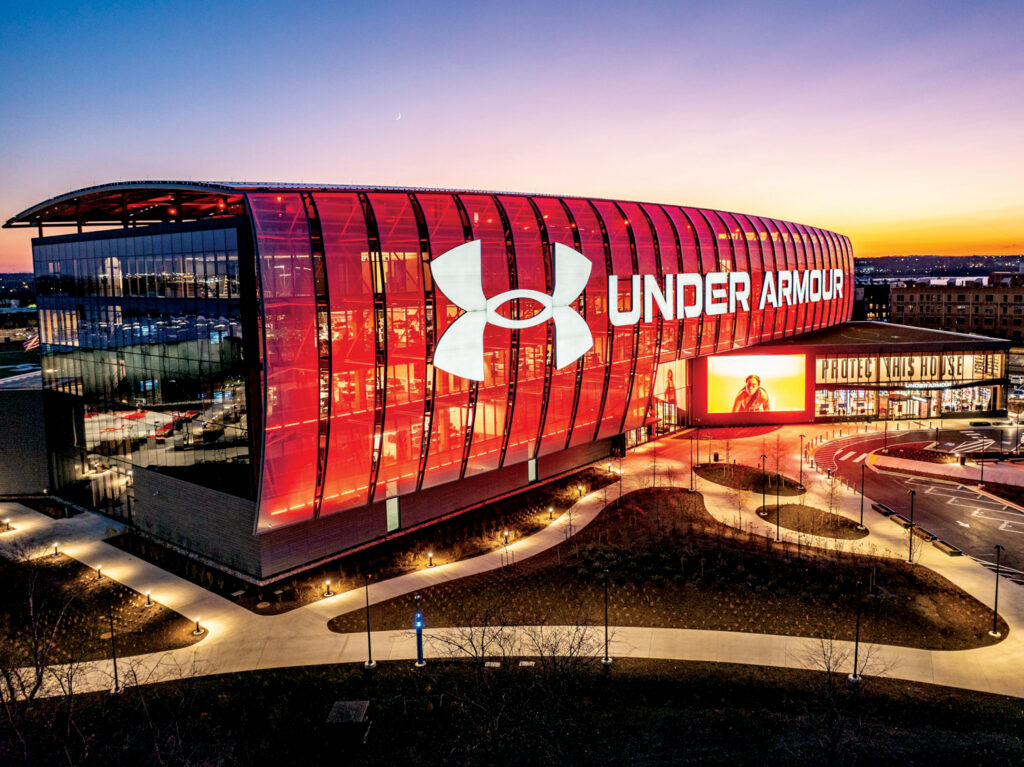
A major feature of the new headquarters for iconic sports clothing company Under Armour® is its front facade membrane cladding (see page 13).
“ETFE was selected to address the project’s primary exterior challenge of creating a highly visible, 360-degree building that connects to the surrounding community while expressing Under Armour’s identity as a leader in athletic apparel through form, texture and performance,” says Robert Blabolil, studio director and senior associate at Gensler. “The north facade—prominently visible from Interstate 95—became the canvas for a lightweight, wave-like canopy that could be dynamically lit to function as a glowing landmark for community and civic moments, glowing orange when the Orioles win, displaying rainbow colors for Pride festivities and more.”
Goldsmith finds good reasons for expecting and welcoming smart technologies such as AI in architecture. “AI will seep into nearly every corner of the workforce,” he says. “Expect AI in 2026 to play a pivotal role in real-time project management and predictive maintenance of structures, ensuring longevity and safety” in buildings.
Movement
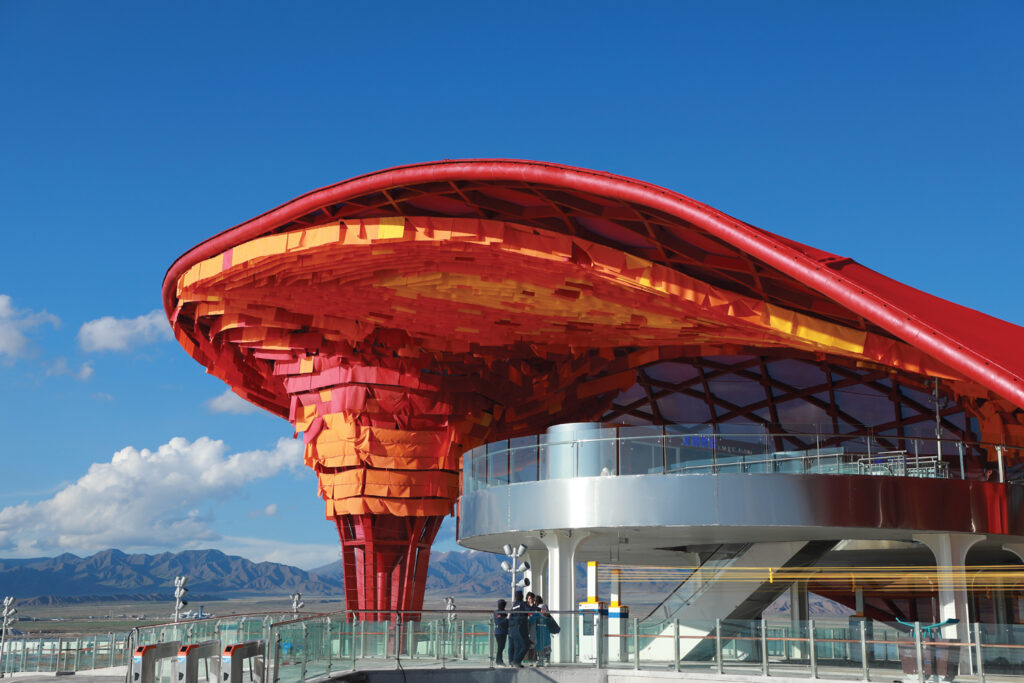
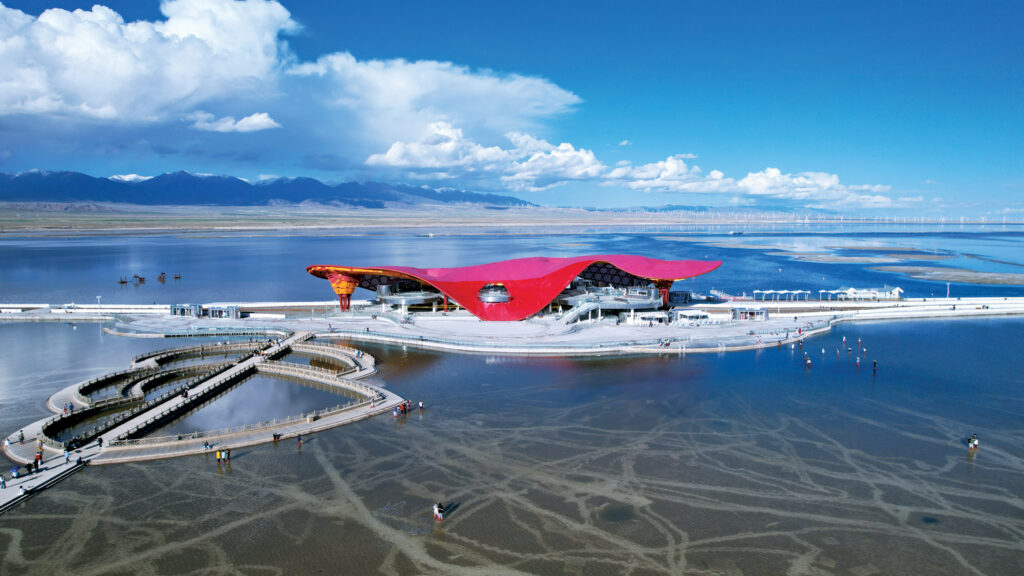
A key part of an immersive environment could be the opportunity to traverse an entire setting from outside to inside, to more fully engage with a project’s purpose. The Chaka Wind Station does this beautifully, both as a stop on a regional sightseeing train line (see page 15) and as a metaphor for speed, both physically on rail tracks and as a visual representation of wind, with its bright-red fabric roof.
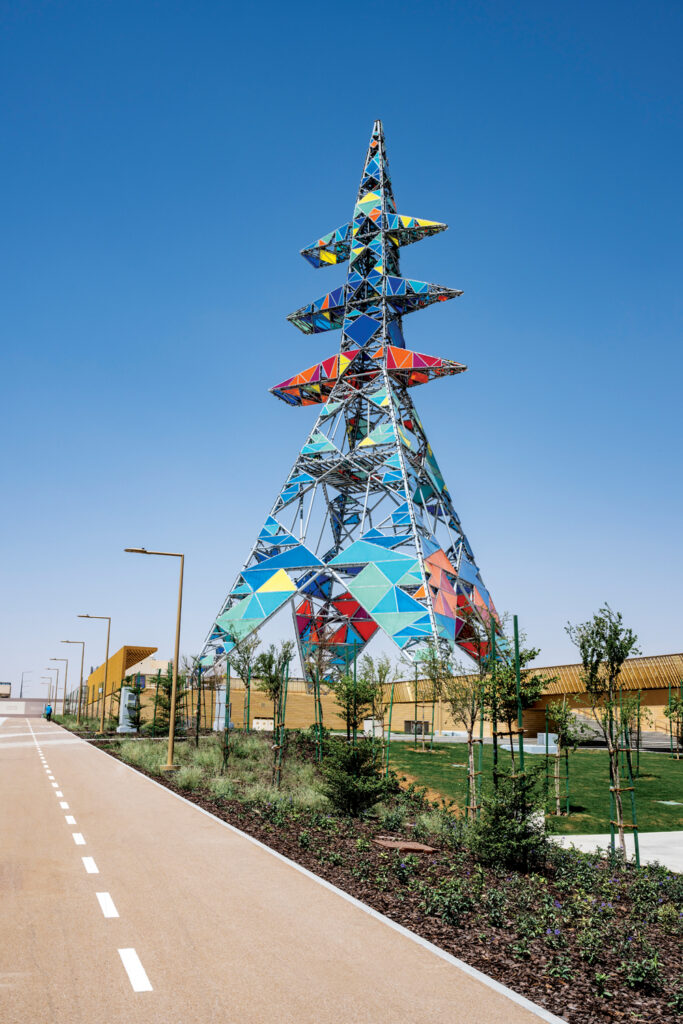
Another approach might be the repurposing of a high-voltage transmission tower into a nine-story-tall artwork, the embodiment of electrical power and movement (see page 17). The Art Tower is an icon for a major redevelopment project in Riyadh, Saudi Arabia, that anchors a walking path through neighborhoods that once were divided by power lines.
Connection
Every building must somehow make a reasonable connection with its surroundings, if only to clearly reveal how to enter. Kai Tai Sports Park is one of Hong Kong’s most significant public infrastructure developments in recent years (see page 18). The plan by Populous, architects for the project, called for repurposing the 28-hectare former airport site into a vibrant sports district with public urban landscape. The site is protected overhead by a massive transparent canopy the length of the “Sports Avenue,” encouraging year-round foot traffic. This five-story entry welcomes visitors with lighting, building-high graphics and inviting pathways throughout the site.
“The master plan for this park,” says James Pearce, senior principal/senior architect with Populous, “had three functional goals: Create a major national event space, support athletic activity development in the community and encourage community sports at the grassroots level.”
Reducing carbon impact
The good thing about all these examples is that fabric structures automatically reduce steel loads, provide shade and are by nature low embodied carbon.
Consider Gensler’s Under Armour project.
“ETFE is a unique material largely because of how thin and lightweight it is,” says Elizabeth Resenic, sustainability director and senior associate at Gensler. “Across the 287,000-square-foot building, the ETFE accounts for approximately 0.01% of the total material volume modeled in the embodied carbon assessment, which is not a significant enough quantity to meaningfully impact the building’s overall carbon footprint. Any alternative material we considered, such as a stretched fabric screen, would have had a greater environmental impact due to its higher material density. As a result, our sustainability strategy for the ETFE focused less on embodied carbon reduction and more on the material’s longevity, durability and recyclability, all of which align with the project’s sustainability objectives.”
It’s worth repeating a number of resources from past issues of Fabric Architecture for architects when it comes to using fabrics and membranes. Counting the embedded carbon units of every material specified can be burdensome, but there are more tools created every year that help with this task. One tool is the free online website Transparency Catalog . According to the catalog, many fabric manufacturers’ products fit within the CSI MasterFormat® numbers 09 77 00 (special wall surfacing), 12 05 13 (fabrics), 12 24 13 (roller window shades), 13 31 00 (fabric structures) and 13 34 00 (fabricated engineered structures). (See resources listed at the end of the article for websites.)
Another useful tool is the website Lot21, created to help the design community decarbonize the world. The site has numerous case studies from around the world that provide strategies architects can apply to their own projects to reduce the carbon footprint of each project. Lew Epstein, founder and CEO of Lot21, says, “Tensile fabrics — with their relatively low embodied carbon footprint — have shown their capability to replicate the essential services that nature inherently provides, such as shade and rainwater runoff collection. These well-established design and engineering solutions can also coexist with nature, enhancing each other.”
We hope this Specifier’s Guide is useful and compelling as another tool to improve your next building’s design and performance. ϖ
Bruce N. Wright, FAIA, the former editor of Fabric Architecture, teaches architecture and construction management at Dunwoody College of Technology and is a consultant to architects and designers. He is a frequent contributor to Specialty Fabrics Review and Textile Technology Source.
Resources
AGC [ETFE foil] | agcchem.com
Birdair® | birdair.com
Carl Stahl [stainless steel cabling and mesh] | carlstahl-architektur.com
Fabritecture [facades] | fabritecture.com
Lot21 | lot21.org/about
Nowofol GmbH [TensoSky ETFE] | nowofol.com
Serge Ferrari Group | sergeferrarigroup.com/us
Structurflex [facades] | structurflex.com
Transparency Catalog |
transparencycatalog.com
Taiyo Kogyo Corp. | taiyokogyo.co.jp
TYLin | tylin.com
The post The rise of immersive environments appeared first on Fabric Architecture Magazine.






Leave A Comment