
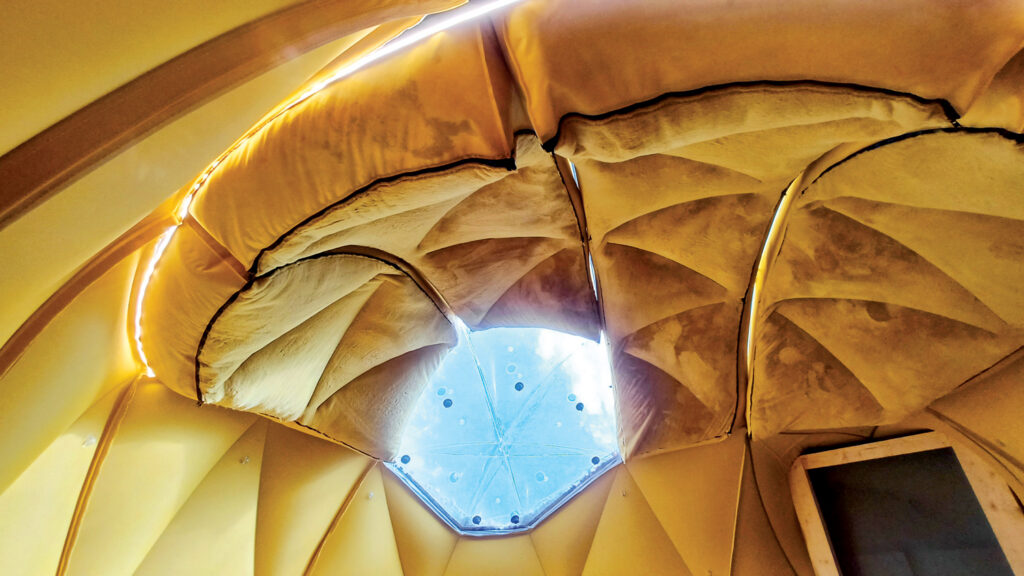
Inspired by their research on inflatable structures as moon habitats, the team at Pneumocell, Austria, is testing a much more grounded prototype—a subterranean geodesic Earth home called Pneumo Planet.
At the core of the system is a dual-layer textile membrane weighing less than 1 kilogram per square meter (3 ounces per square foot). The outer layer consists of a polyester fabric coated on both sides with polyurethane (PU), making it airtight and moisture- and microbe-resistant, and it is certified as flame-retardant. The inner layer is a single-sided PU-coated polyester textile, with the fabric surface facing the interior.
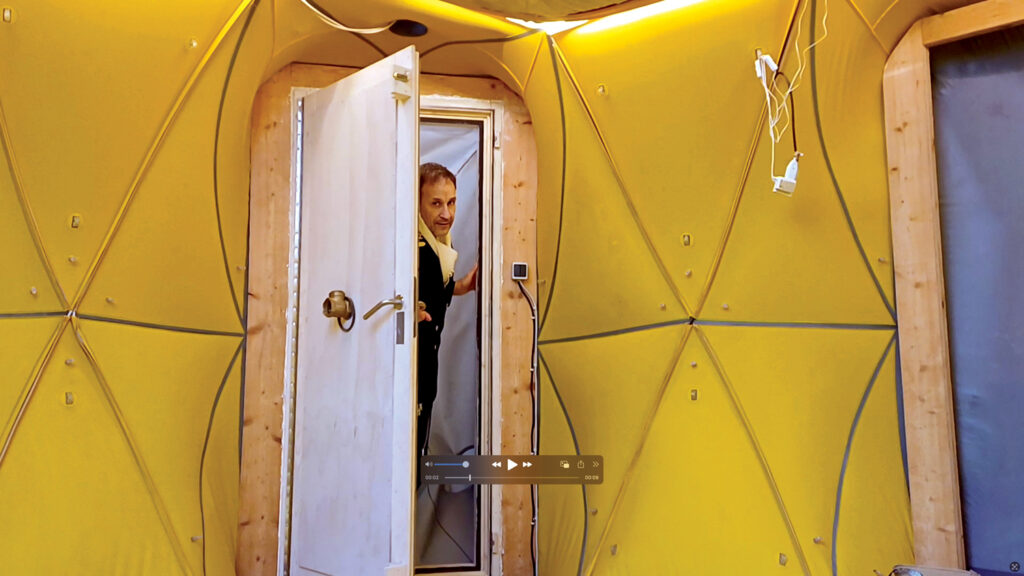
Both membrane layers are welded together in a modular triangular grid, forming inflatable cushion cells. The dual-membrane design ensures structural redundancy: Damage to one layer does not result in air loss, and any leak can be easily located.
Hook-and-loop tape allows electrical cables to be routed along the walls and enables the attachment of shelves and closets. Eyelets at regular intervals allow for the hanging of pictures on the walls or lighting fixtures.
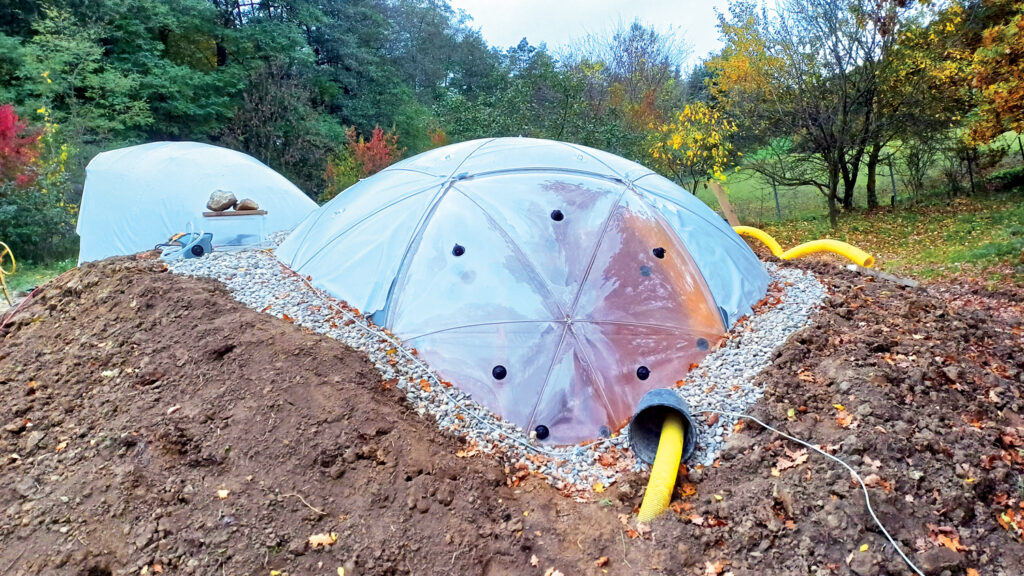
With funding support from the European Space Agency, a single-room prototype with an airlock was installed in Austria in November 2025 and is currently undergoing testing. Early results demonstrate a warm and stable indoor climate, even before the installation of additional window insulation.
Pneumo Planet is seeking funding, investment and pilot projects to scale the system for applications in sustainable housing and lightweight textile architecture, such as tourist cabins.
See Specialty Fabrics Review‘s Swatches section every month for short stories covering news, ingenious projects and research.
Fabric structures businesses, check out the Fabric Structures Association for information on specific benefits and resources for your market and ways to become further involved in the industry.
The post Inflatable underground geodesic homes tested by Pneumocell appeared first on Fabric Architecture Magazine.






Leave A Comment