

For many people, possibly even most, a wedding without dancing is almost as unthinkable as one without an open bar or a multitiered cake. In fact, the desire to get down and get funky is so ubiquitous as to make dance flooring an essential decor element. And it’s not just at weddings; almost any event—be it graduation, birthday or retirement parties—can be a reason for people to get up out of their seats and hit the dance floor.
Even so, weddings are where dance flooring comes into its own, making it a “highly sought-after item” for these celebrations, says Elizabeth Haas, owner of Epic Event Rental in Eden Prairie, Minn. Whether it’s a small backyard wedding or a much larger gathering, she says, a dance floor will likely be part of the event’s layout.
Trends and options
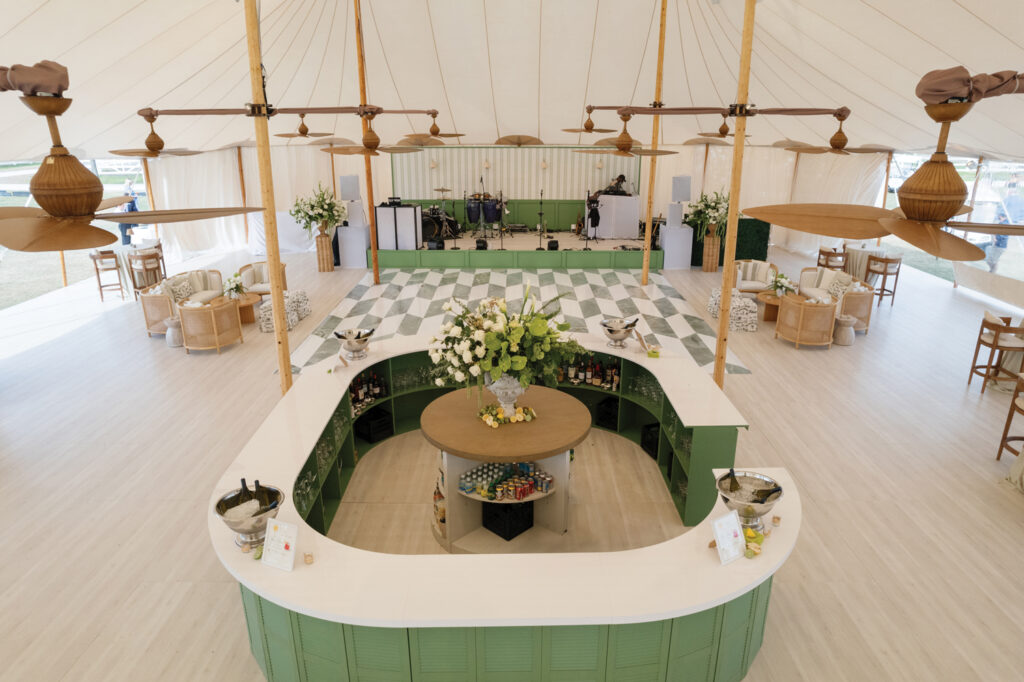
Rob Cruikshank, president of 24/7 Events in Valencia, Calif., says they’re experiencing a “high demand” for two styles in particular: the “minimalist mirror” and the “maximalist pattern.” As he explains, the minimalist generally incorporates black, white or soft champagne flooring with a high-gloss finish that reflects the overhead lighting and other design flourishes.
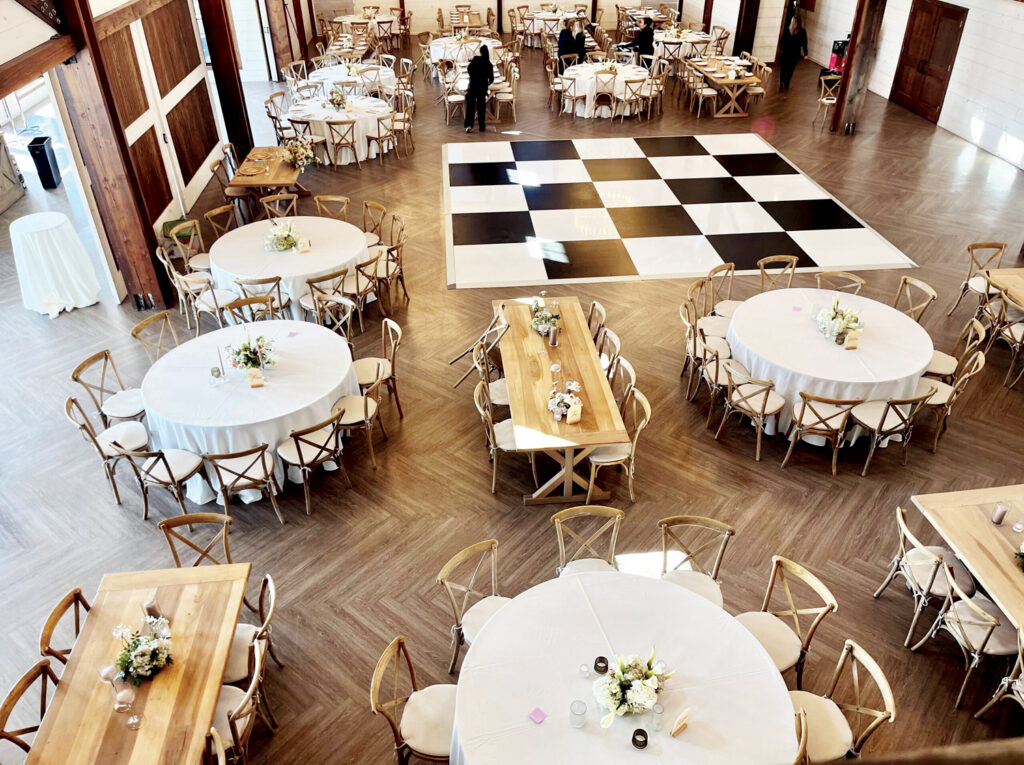
“[This creates] a sense of infinite space,” he says. “We’re also seeing check patterns on the rise, in either black and white checkered or wood and white. On the other hand, maximalist designs might include intricate geometric patterns, florals or custom illustrations that tell the couple’s story.”
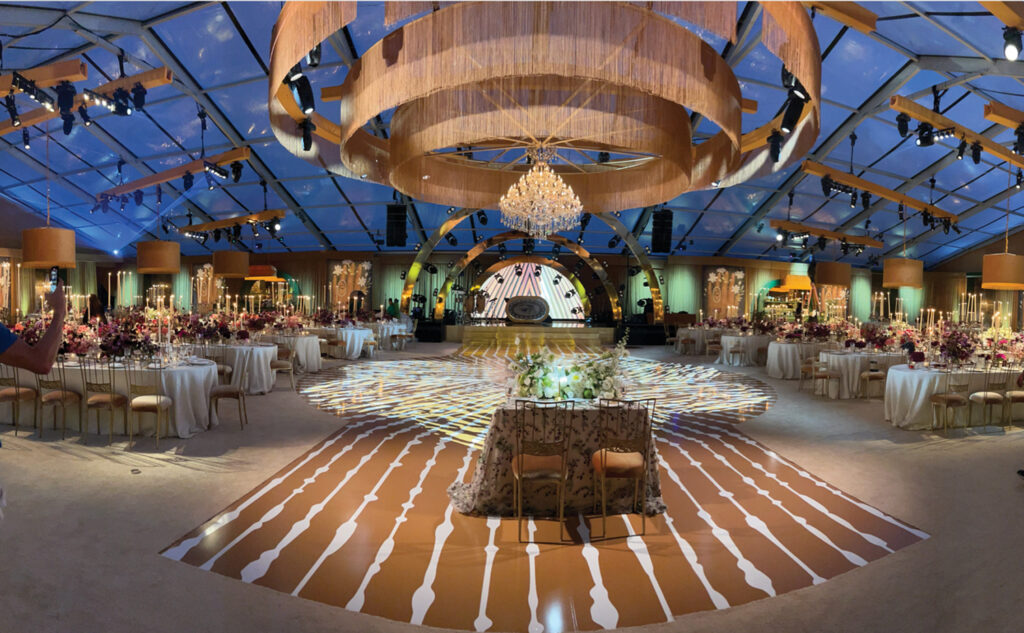
Cruikshank credits the appeal of this design choice in part to its visuals, which correlate nicely with the thirst for unique social media content. Greater use of professional photography also plays a role.
“That bird’s-eye-view shot of the first dance has become the iconic image of the night,” he says. “And a custom-designed floor makes that moment pop in a way that a standard floor cannot.”
As for dance flooring materials and finishes, he says there’s a split between those imparting an ultra-modern feel, such as high-gloss acrylics, and natural textures such as washed oak and reclaimed-wood finishes. Cruikshank attributes the popularity of both trends to weddings and galas taking on a more residential look and feel, with customers wanting flooring reflective of a luxury house or high-end lounge.
“We’ve seen a beautiful pattern of white and northern birch layout, which adds such a flair and fun design to the decor,” says Haas, describing some of the company’s more popular designs. “The classic white and black dance floor is just that—a classic. And for outdoor parties by the lake, the walnut is such a beautiful touch.”
Kevin Lococo, vice president of sales for Palmer Snyder in Conneautville, Pa., says they’ve also noticed an increased preference for variety in wood-grain looks. “Twenty years ago, there was one common wood-grain style that was dominant across the country,” he says. “Recently, different regions and tastes have driven us to offer more options. We sell the most white, dark walnut and American plank, in that order. The newer up-and-coming colors are classic timber and cream oak. Dark oak is a potential leader this year, too.”
Beautiful but durable
Expanding inventory to include flooring is a big investment. As with all rental items, event companies want flooring that is not only going to last for years but also look great.
Cruikshank says when the company began offering tenting, flooring soon followed. They selected dance flooring manufactured by California Portable Dance Floor LLC, offering 4-by-4 panels in plank, white and black. The floors are durable, won’t scuff or dent under heavy use and have a locking mechanism, ensuring the panels remain tight and seamless throughout the event—especially important not only for design but for safety, says Cruikshank, explaining this flooring also passed the “stiletto heel test.” Additionally, going with one system makes it easier to expand, mix and match panels, etc., affording greater flexibility and creativity.
Haas says when it came to flooring, they wanted a product that was easy to set up/remove and clean, something durable that could be used indoors or out. They decided on portable dance flooring from SICO America Inc., comprised of 4-by-4-foot pieces with trim.
“We offer [the panels] in walnut, northern birch, white and black and can offer small floors from 16 square feet on up to 1,600 square feet,” says Haas.
Palmer Snyder manufactures several products, including dance flooring for the rental and event markets. Two of its flooring options are the Palmer Snyder EventXpress™ modular indoor/outdoor dance flooring and Groove® semipermanent tent flooring. Groove covers the entire area under a tent rather than creating a specific dance floor, although guests can certainly use it for dancing. The surface is constructed of a proprietary composite with a high abrasion-resistant wear layer and can be installed without a subfloor.
Providing a discrete dance floor area, EventXpress comes in acrylic for a high-gloss/low-maintenance surface and in vinyl, which is appropriate for all weather conditions. For most events, the panels and trim—which are attached with a proprietary camlock system—can be installed directly on the ground without subflooring.
Which to choose? Lococo says if a tent/event rental company is most often placing flooring inside the tent without other flooring around it, purchasing the dance floor “makes sense.” However, if it frequently installs flooring solutions under the entire tent, Groove would be the better choice. Most of Palmer Synder’s customers start with EventXpress, but many eventually end up with both.

Additional considerations
In addition to identifying the type of solution most often needed, Lococo advises rental companies new to flooring also select “safe, middle-of-the-road” colors to better their chances of achieving a faster ROI. Dark walnut or classic timber fall into this category.
“These colors will help our rental owners cover the largest amount of their opportunities,” he explains. “White is typically reserved for weddings or high-end corporate events. Dark walnut and classic timber are medium-color wood grains that meet a larger range of applications, including many weddings.”
The first thing to know when calculating how much flooring a customer may need is the guest count, says Haas, adding that of this total, only about one-third are going to “shake their booties.” Out of 100 guests, for example, she estimates the floor will need to accommodate about 33 people, translating to a nine-piece setup or a 12-by-12-foot floor.

“We suggest four people to every 4-by-4-foot of dance floor,” she says. “This may vary if the client does or does not have more space and if dancing is super important to them.”
Cruikshank says the right size dance floor can make all the difference. For example, one that’s too small can become an annoyance as well as a safety hazard, but one that’s too large can appear vast and empty, making people reluctant to show off their moves.
“We generally calculate the necessary space by assuming about 4.5 square feet per person,” he says. “This ensures the floor feels packed and high-energy without the guests constantly bumping into each other.”
Like Haas, he recommends having a discussion around dancing expectations, modifying floor sizes based on how much dancing the client thinks will happen.
Safety is another issue rental companies should discuss with their customers since these floors can become slippery when wet, potentially leading to falls and injuries. Haas says they not only inform their clients of this but also put it in their contracts. Additionally, the product they offer has sloped aluminum edging around the dance floor, preventing tripping while allowing guests using mobility devices to access the dance floor. Cruikshank, who “always educates” the client on slipping, says his company looked for ADA-compliant edging for those same reasons.
For rental businesses exploring the possibility of adding flooring to their inventories, Cruikshank says investing in a high-quality product is obviously important. But, he adds, the same care should be taken when it comes to transport carts and storage solutions, since much of the damage these floors undergo is caused during transport and loading, not by people dancing.
“If you protect the panels during the handling process, they will serve you well, rental after rental, for years to come,” he says, “allowing you to charge a premium for a product that looks great every single time it is installed.”
Pamela Mills-Senn is a freelance writer based in Seal Beach, Calif.
The desire for greater personalization is sparking interest in wrapped dance floors, says Rob Cruikshank, president of 24/7 Events in Valencia, Calif. For those unfamiliar, wrapping entails applying a high-grade, adhesive-backed vinyl containing graphics and images over a standard dance floor. Once largely confined to corporate brand activations or product launches, wrapping has been embraced by the private sector and is in particular demand for mid- and high-end weddings, says Cruikshank, adding this offers the ability to create a uniquely memorable design feature for events.
“We’re seeing a massive shift towards full-floor wraps in seamless, high-gloss whites or custom patterns that mirror the event’s floral design or the venue’s architectural motifs,” he says. “The dance floor surface has moved from being a functional surface designed to gather people for dancing to become a massive central design element that anchors the entire aesthetics of the room.”
Wrapping’s popularity is fueled by the desire to provide guests with a totally enveloping experience. In response to this burgeoning demand, 24/7 Events—which doesn’t install the actual wrapping—partners with graphic designers and installers to offer this service. Because not all floors take adhesive well, they are careful to guide clients who want this service in selecting suitable flooring.




Leave A Comment